
2 Weeks to Cryptomania / 3 Qs with Nitish Pahwa
and details about my book release party

Welcome to Cryptomania, the newsletter, a preview companion to my book with the same title, which arrives on August 6. The book traces the pandemic-era rise and fall of cryptocurrency, largely unfolding over 20 short months between March 2021 and November 2022. Pre-order Cryptomania here.
We are two weeks away from Cryptomania launching. The highlight of last week was going on NPR’s Science Friday to explain my Texas bitcoin story, and why folks who live near a bitcoin mine are getting sick. I was extremely mediocre at science in high school, so saying the words “vascular dysfunction and oxidative stress” on a national radio broadcast was quite a surprising turn of fate. The one science class I ended up taking in college was a semi-joke course called “Natural Disasters” —which, in hindsight, was good preparation for the other highlight of my week—seeing the very fun Twisters in theaters.
For the week of my book launch, I’m headed up to NYC, where I’m going on a bunch of podcasts and throwing a book launch party at Yu & Me Books on Friday, August 9. Please come out and say hi!
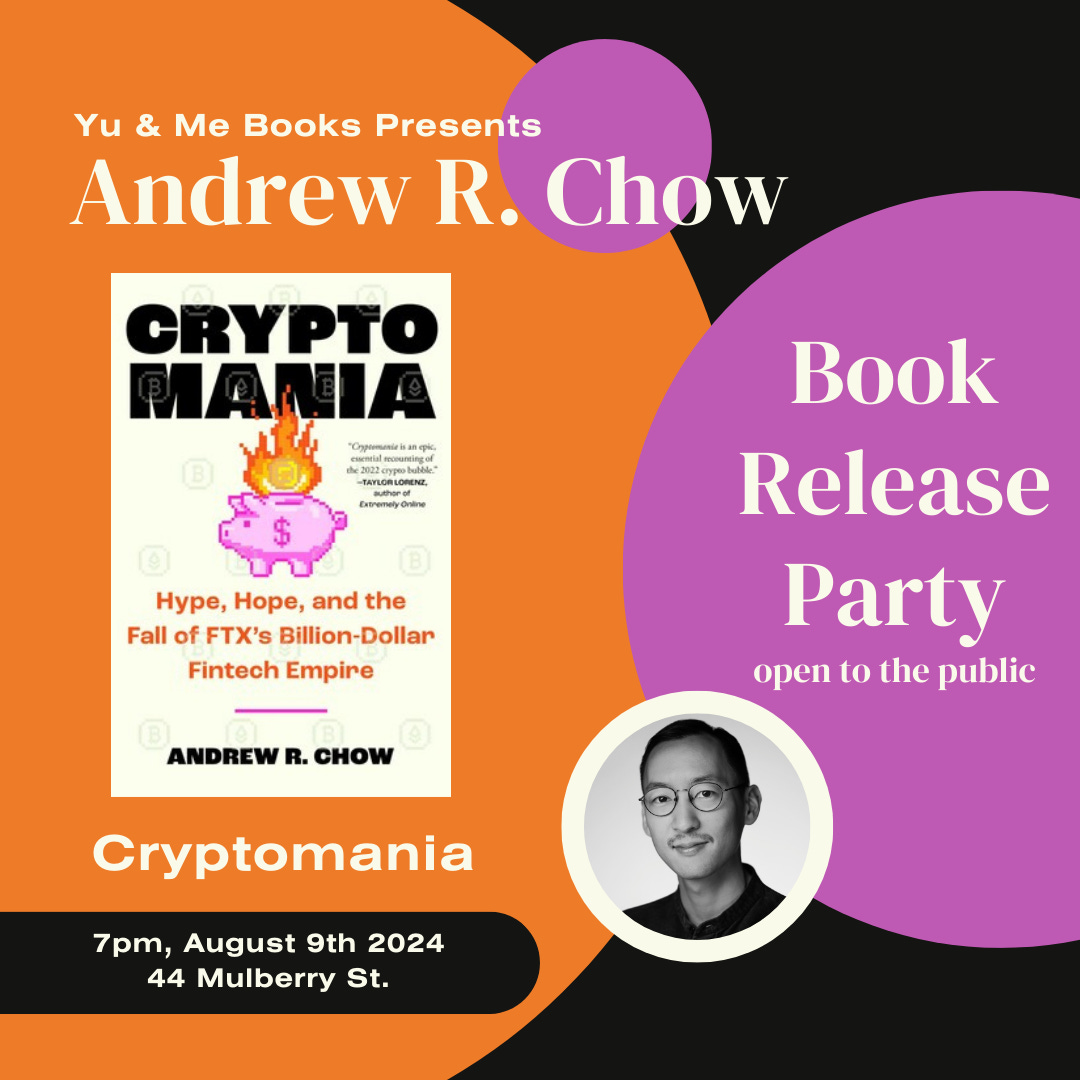
At the book event, I’ll be having a conversation with my friend Nitish Pahwa of Slate Magazine, who covered the SBF trial alongside me and many other journalists last year. In preparation, I asked him to send me over three questions about the book. Here they are.
1. What sort of unique perspective, vantage point, or story does Cryptomania offer readers that they won't get from the many other crypto-meltdown books published since FTX's bankruptcy (some of which you shout out in your acknowledgements)?
Whenever I told other reporters at the SBF trial last year that I was writing a book on SBF and crypto’s pandemic-era bull run, the first question they would inevitably ask me was, “how is it different from Zeke’s?” They were referring to Zeke Faux’s Number Go Up, a book so impactful that prosecutor Danielle Sassoon literally held up a physical copy of it in court. And I would inevitably mumble back, “It isn’t, really.” Zeke’s book is an excellent chronicle of crypto’s wild rise and fall, and it hits many of the same beats mine does—including Axie Infinity, the Bored Ape Yacht Club, and the Terra-Luna debacle. (I had already written much of my book before I read Zeke’s, mind you.)
But I think there’s one major distinction that sets my book apart from his. Zeke admits very early on in the book that he started writing it anticipating a crypto meltdown. In essence, he was always derisive of the industry and rooting for its failure—and that stance informs book’s arc, rhetoric, and attitude toward its subjects.
My book begins with the opposite presumption, by embedding with the idealists who fervently believed that crypto could be an aspirational, utopian force that could upend fundamentally broken systems. (That includes big tech, predatory banks, and monetary systems that protect the interests of the wealthy.) While many people respond to the word “crypto” with a visceral disgust, it remains a stirringly powerful drug for so many newcomers precisely because of how terrible so many status quos of society are.
Starting from that point—and in empathy with those seeking to create a fairer world—my mission of Cryptomania was then to attempt to show how that mission, at least for the time being, went so terribly awry, and ended up creating systems even more avaricious and dystopian than it had hoped to dismantle.
2. You talked to so, so many people for Cryptomania—industry bigwigs, idealists, scammers, and regular folks either caught up in the excitement or left hanging at the unfortunate end of a scheme. Which of these people made for your favorite interview? Or, alternately, which character are you most excited to introduce to readers?
If the book’s villain is SBF, then its hero is Owo Anietie, a Nigerian Afrofuturist artist who, in 2021, learned about the NFT craze and became intrigued by how it might provide him a pathway to self-sustaining artistry. Owo started painting on canvas before graduating to eye-popping visual art and then film. He’s a talented, industrious, and charismatic: qualities that would have befitted him in any situation, but allowed him to catapult to semi-stardom in an NFT landscape that begged for feel-good stories. Owo began selling his work for thousands of dollars, created an NFT project that made him a millionaire on paper—until the market moved on and discarded him, with insults, taunts and epithets hurled at him from across the Atlantic.
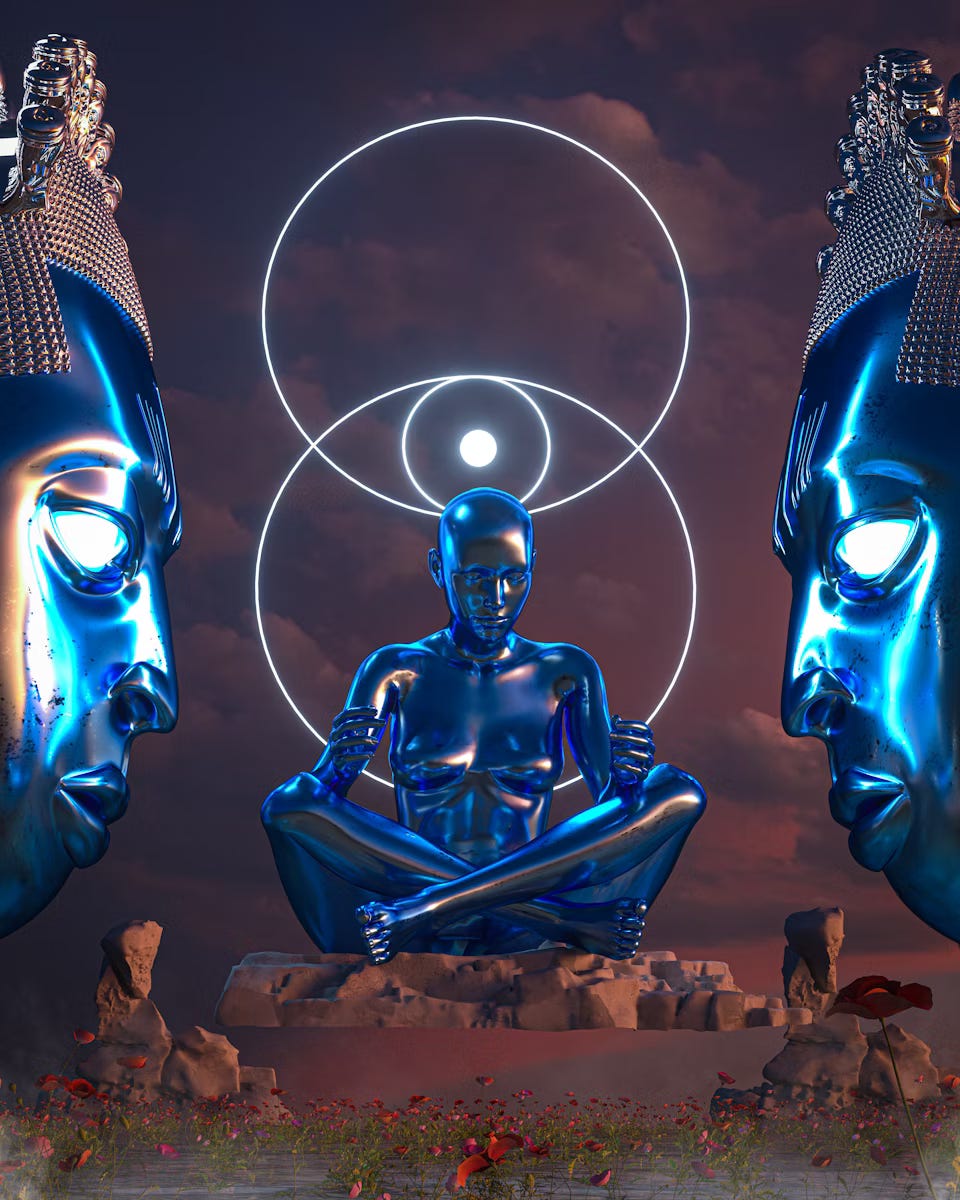
Owo is extremely compelling as an individual, but he also representative of why the Nigerian public at large has many more legitimate and urgent reasons to be interested in crypto than Americans, which I detail in the book.
3. What's the most fascinating detail or story you heard in the course of your reporting that didn't make it into the final draft?
I talked to more than a dozen former Alameda/FTX staffers in the course of my reporting, and most of them flatly refused to go on the record or even on background, no matter how much cajoling I tried. But one common thread I heard from several of them was Sam’s casual cruelty—an aspect of his character that only really came out when Caroline Ellison took the stand last fall.
That’s all I can really say about that on the record—but I believe my book has more than enough juiciness to keep readers entertained.